House of the Blackheads Riga: Tickets & Tips
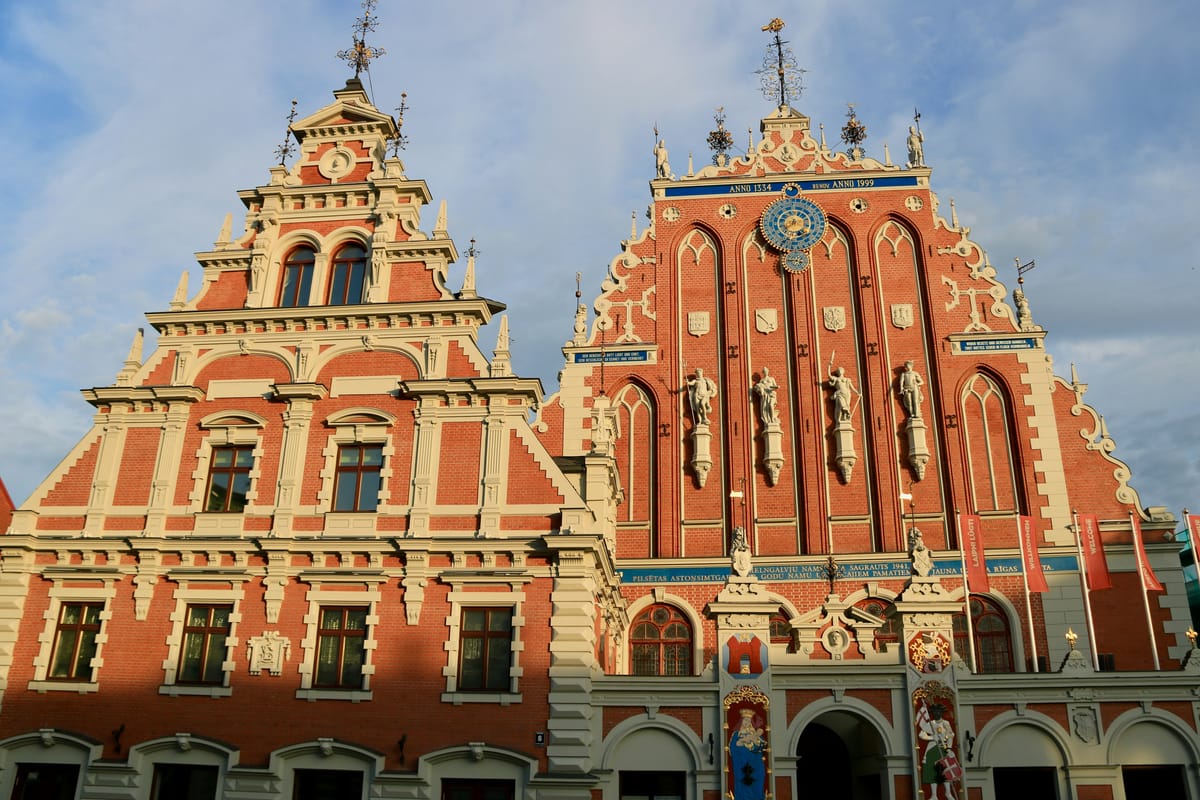
My travels often lead me to places that offer not just stunning architecture but also deep historical roots. Riga, the capital of Latvia, boasts one such site: the House of the Blackheads. When I was planning my trip, I wondered if paying the entry fee was just another tourist expense or a genuinely enriching experience. I leaned towards the latter, and I don't regret it, especially because of some surprising Polish historical details that many might overlook.
In Short: House of the Blackheads Tickets
A standard ticket to the House of the Blackheads costs 8 euros (May 2024), with discounts available. It's primarily worth visiting for those interested in Riga's history, architecture, and the legacy of European merchant fraternities. Keep in mind that the interiors are a reconstruction, but they offer a vivid impression of the building's former grandeur.
- Price: 8 EUR for a standard adult ticket.
- Availability: Open daily, except Mondays, from 10:00 to 18:00.
- Value: Recommended for history buffs and those curious about Polish-Latvian historical ties.
- Highlights: The grand ballroom, royal cellar, and exhibitions on the fraternity's history.
House of the Blackheads Ticket Prices and Options
A standard adult ticket for the House of the Blackheads in Riga is 8 euros. Concessions are available for students, seniors, and children, reducing the price to 4 euros, with free entry for children under 7. A family ticket (two adults + children) costs 16 euros. My visit was solo, so I paid the full price. I believe the price is fair, considering the meticulously recreated interiors and the site's historical significance. I briefly considered a combined ticket with another attraction but decided to focus solely on the House of the Blackheads to fully absorb its unique story.
| Ticket Type | Price (EUR) |
|---|---|
| Standard | 8 |
| Concession | 4 |
| Family | 16 |
| Children (0-6) | 0 |
What Exactly Will You See Inside? My Impressions
Plan trips like a pro
Save time and stress. Automate your planning with Kompas Podróży and AI.
- Audio guides — first 2 free in every trip
- AI receipt scanner — split group costs instantly
- AI chat — private guide who knows your trip
- AI generator — instant estimates and packing lists
- Schedule & budget for the whole group in one place
Free access No credit card required
The interior of the House of the Blackheads features carefully reconstructed halls that reflect the opulence of the former fraternity's seat. You'll see the Banqueting Hall, the Grand Hall, and uniquely decorated rooms. What truly stood out to me, however, were the historical exhibitions related to the Treaty of Riga from 1921. To my surprise, in one of the halls, I found a commemorative plaque marking the signing of this document, which concluded the Polish-Bolshevik War. Alongside it, several paintings clearly displayed Polish flags. It was a poignant moment, highlighting how deeply Polish history intertwines with that of the Baltic region.
"I was genuinely surprised by the strong Polish accents resonating in the heart of Riga. Seeing the plaque for the Treaty of Riga and Polish flags in the artwork was an absolute highlight of my visit, proving that true history often hides in the most unexpected places."
Additionally, the cellars house a section dedicated to the history of the fraternity itself – their customs, merchant activities, and ceremonial roles. It offered a fascinating glimpse into how medieval guilds operated and their significant role in city life. All of this makes the House of the Blackheads more than just a beautiful facade; it's a place with a true historical soul.
The Building's History: From Medieval Times to the Treaty of Riga
The original House of the Blackheads was established in the 14th century as the headquarters for a fraternity of bachelors, merchants, and foreigners. It served as a hub for meetings, celebrations, and trade, forming the social and economic heart of Riga. The building underwent numerous renovations until its destruction during World War II. What we see today is a meticulous reconstruction completed in 1999, a testament to Latvian resilience and determination to rebuild their heritage.
Its significance, however, extends beyond its architecture. It was here, on March 18, 1921, that the Treaty of Riga was signed, formally ending the Polish-Bolshevik War. For Poland, this was a crucial moment in solidifying its independence after years of partitions. The presence of the commemorative plaque and paintings inside the House of the Blackheads is a powerful reminder of the mutual influences and tumultuous history that shaped Central and Eastern Europe.
Is It Worth Buying a Ticket? My Assessment
Yes, in my opinion, it is worth buying a ticket. If, like me, you appreciate exploring history up close rather than just admiring facades, then the House of the Blackheads is for you. It's not a museum with interactive screens at every turn, but rather a classic exhibition that allows for a calm absorption of information and appreciation of the reconstruction's craftsmanship. Especially for those interested in the region's history, the threads connected to the Treaty of Riga are a bonus that's hard to find elsewhere. The entire visit takes about 1 to 1.5 hours, which fits perfectly into an intensive city exploration. If you're looking to plan a similar trip to Riga, check out a ready-made itinerary in the Trip Catalog.
Practical Tips Before Your Visit
The House of the Blackheads is located in the Old Town Square (Rātslaukums), making it easily accessible from any point in the Old Town. It's open from Tuesday to Sunday, from 10:00 to 18:00. Remember that it's closed on Mondays, so factor this into your travel plans. Tickets can be purchased on-site, but during peak season, especially for groups, it might be wise to consider booking online in advance. The visit itself doesn't require special preparations, but it's good to remember that these are recreated interiors, not original ones, so don't expect antique furniture from the era. Focus on the rich history the building represents.
🌐 Czytaj po polsku: Dom Bractwa Czarnogłowych w Rydze — opinia
Related articles
Plan your next trip
Plan your next trip with Kompas Podróży — for free!
Found this article useful? ♡ Support Kompas Podróży